Fundraising

Wednesday, May 25, 2011

Consider the Price of a Cup of Coffee

Consider the Price of a Cup of Coffee: Commercial Interruption

Inspired by the fundraising efforts of the students at BBHS (see their tab) I thought I would make an official break in the blog here to for a commercial interruption.

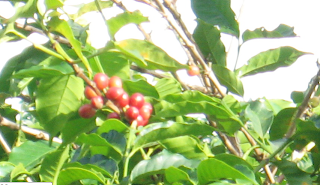
Rwanda is famous for many things and one of those things is coffee.  This is lucky for me as I love coffee and while I rarely drink more than a cup or two in the morning those two wake up cups are now, rightly or wrongly, a part of each morning.  I find it amusing then that while in Rwanda where coffee is growing all around me I was, up until a few weeks ago, drinking Nescafe.  Is it because I prefer Nescafe?  Not at all.  It is rather because while some people may mistake me for being a minimalist they should instead see me as someone with little or no interest in spending any time or effort in feeding myself.  Hence, because it is just that much easier to make a simple cup of Nescafe than to use and clean a french press full of rich aromatic grounds that is what I did.  Turns out, however, that Rwandan coffee is famous for being good, because it really, really is delicious and after my first proper cup I am now inspired to clean that French press each morning even if it means I have to do it out in the yard where the running water is.

I believe that most people may be more familiar with Rwanda as they identify Rwanda with the terrible genocide of 1994.  However, what many people may not know is that the failure of the coffee and tea crops prior to the events that began in full on that April 6th was one small part of what ignited the flame of the fire that raged through the country for the next 100 days.  Events that devastated the country, shattered people’s lives, tore apart families and communities, and destroyed the overall infrastructure of the country, including the education system.  It is sixteen years since the genocide and the country is making great strides in their efforts to not only rebuild families, communities, and society, but also to create something great in every aspect of their country.  CUSO-VSO is a big part of those efforts in the education sector, and in such a small and impoverished country the work does matter, and the work is effective.

Therefore, inspired by the kind support of the students at BBHS I am going to send out my official request to consider donating to the work of CUSO-VSO in Rwanda.  What I am asking for you to consider is to donate the  price of a cup of coffee.  All donations will be appreciated, be used wisely to help to create an education system in which quality education for all is not just a slogan, as well as a system that does directly affect people’s lives and their futures.

I thank you and the students at BBHCS for inspiring me to take the time to put myself out there for a cause I believe in, in a way that is not easy for me (directly asking for support).  Therefore, if you are interested in supporting this fundraising cause, please see the fundraising tab on this blog, and many deep and sincere thanks to those who have already made that generous donation and supported this work. 


Wednesday, May 18, 2011

"So You Think You Can Teach? Putting Your Money Where Your Mouth Is" Part 2...Finale?

Part 2
Piece of cake right?  Well, it can be if you chose your methodology wisely, the teacher you are working with hangs in there with you, another ten or twenty minutes can be squeezed out of the schedule, and you don’t succumb to the heat of the classroom.  If all of this goes well, and to be honest because the students you are working with are fabulously eager students it usually does, you will take that moto ride home feeling pretty darn terrific.  However, this feeling of elation depends immeasurably and irrevocably on your chosen methodology and program for the lesson.  A choice you usually have to make in one minute or less. 

Nothing like a good song to learn to


Light and shadow, lunar and solar eclipse, sexual reproductive parts, (don’t worry they won’t laugh, unless you want them to), parts of the tongues, the skeletal system, etc…what’s up in that gray matter?  One minute go…


We're waiting...

Also remember you can expect to have only about 40 % of what you want to convey through the teacher to be conveyed so you had better make it simple and concrete, be ready to move some bodies around, and to sweat…basically just resign yourself to sweating all the time, and by the way it is impolite to eat or drink in public so there will be no water bottle handy to replenish your fluids.  Also know that because the practice has been to not do these things the students may not know how to line up for a game, get into groups, think indepenantly, answer critical questions, practice dialogue together, form a circle, make guesses, estimate, or anything that does not involve listening, repeating, staying quiet in their desk, and answering very basic memorization questions.

Ready and willing


Are the wheels spinning?  It has been a minute and the very nice Rwandan teacher is looking at you.  They are looking at you and waiting for your suggestion that will not only knock their socks off, but also make their ten hour, double shift a day easier, more enjoyable, manageable, and perhaps, meaningful.  They very much want to be convinced so don’t blow it.  

You may also want to keep in mind that they are unlikely to be impressed with any of the subtleties of teaching like using a learner’s name, letting a student know that you are going to call on them next so that they can prepare an answer and gain confidence, seating arrangement, never turning your back on the class, or any kind of humor or staging within the lesson.  What they want are the facts, the facts being, have more students understood the stated goal in the end?  Therefore, be especially forewarned that you may walk out of the class after a lesson in which students were engaged, discussing, asking questions, and excited and eager to try these new ways of learning only to have the teacher ask you why you had not given them three questions at the end to evaluate their learning.  Teacher observation being another one of the many ideas they are not overly impressed with.
Using an extra large blackboard

Having said all that I am guessing that your co-teaching went well, you did a fair amount of sweating, and had a lot of fun watching students’ eyes light up when they realized that you did indeed expect them to participate, think, work together, and have a bit of fun.  I am also guessing that you will get a warm and genuine thank you from your co-teacher and may even see the teacher that seemed the least impressed with you and your ideas excited to see you a week later to tell you about their independent try at one or many of these learner centered ideas. 

Well, I think if you are still with me and reading any of this with interest it is likely that you are a teacher of high qualifications or at least a teacher at heart.  Therefore, I am happy and pleased to announce you…yes, that’s right¸ you, are now the United States Secretary of Education!  Wow, wee!  I wish you well and look forward to all the amazing things you will do with in your new post.  Whew.

Next?  The long awaited, “Feats of Strength!”

Thursday, May 5, 2011

"So You Think You Can Teach? Putting Your Money Where Your Mouth Is" - Part I


Round Three:
Bring your best
Congratulations, you have made it through rounds one and two of, “So You Think You Can Teach: Rwanda.”  Round three will highlight what it is that I do here, and therefore, will focus less on what the Rwandan teachers do, and more on what it means to stop talking the methodology talk and instead put your money where your mouth is.  Here in round three you may find yourself reveling in the joy of work well done, being schooled in front of ten or so Rwandan teachers by a pack of six and seven year old students, sweating buckets in a hot, dark classroom, picking up every stray bottle cap you can find, or wondering far too late why it is that you never learned the alimentary canal system within the digestive system in fifth grade.

Round three finds the folks who are wanting to stretch themselves as teachers and human beings after many internet searches, inquires, applications, discussions, correspondences, trainings, and travel to Rwanda acting as Basic Methodology Trainers at primary and secondary schools in Bugesera District.  What this means practically speaking is that you are putting yourself forward as a trainer and resource person for teachers and schools on how to more effectively teach any subject at any level.  In other words you are now, the
guru, specialist, authority, professional and all around educational "expert" who is supposed to know everything, and will have to perform at any level for any subject at anytime.  Round three is really all about going big or going home.  With that understood I say, "Let the games begin!"
 
He makes it all look so easy

First, know that most of what you say will be misunderstood as you have just arrived in the country and don’t speak the mother tongue, and most of the people that you work with do not speak your language, although out of politeness they will pretend that they understand what you are saying, and it will be only after getting into some task that requires their help or translation that will you realize they have absolutely no idea what it is that you were trying to convey.  Therefore, you are on your own, perhaps in front of 60 plus students modeling best practices while an audience of ten or so teachers, who have gathered to observe the “expert,” sit silent and stony faced in the back row as your expert self begins to sweat.
Second, know that you will often arrive at a school prepared to observe several teachers in order to give them feedback and ideas for learner centered lessons, only to find that one or more of the teachers are gone, so the head teacher would like you to step into the classroom and take over the teaching as that is what would be most helpful at this time.  “Um, sure…” you mumble as you stumble into a hot, dark classroom full of eager students who stand and politely greet you, and then sit down,  waiting to do whatever it is the strange lady who can’t speak proper Kinyarwanda asks them to do.  Being polite students they will sing, dance, repeat, chant, move, and do anything this expert teacher asks them to do, including repeating, “listen”, “try this”, “no wait”, “don’t repeat”, “just a minute”, “oh, goodness”, “okay, no really wait”, “just sit and listen”, “STOP!” and the like.  They aim to please, and since what they are usually asked to do is repeat and mimic what they see and hear, they are polite experts themselves indeed.  They may even laugh, grimace, or put their hand over their eyes slowly shaking their head just like you, as you look up to see several teachers watching and laughing at you in this sweltering classroom slowly melting as you wonder who is watching their students if they are standing around laughing at you.  
I think this is the way to go

Third, know that you had better have a big bag of both literal and figurative tricks, be quick on your feet, know the Rwandan tools of carpentry, as well as how to diagram both in the inner and the outer eye quickly and from memory.  To prepare your literal bag of tricks, you will need to save each pencil, crayon, marker, decent looking stone or stick, bottle cap, nail, string, newspaper, and tissue box you come across, as well as every last scrap of cardboard or paper you find as the school supply room consists primarily of white chalk, well, I guess if you are really lucky you might find a few colored pieces in there too.  You save every last pencil, crayon, marker, decent looking stone or stick as you will need them to demonstrate the wisdom and joy of using teaching aides beyond a piece of chalk, a chalkboard, and the sound of your own voice.

The famous digestive system

For your figurative bag of tricks all you can do is thank any teacher who ever taught you anything that stuck, and do your best as you will have zero reference books or Ms. Know it All-Google to fall back upon.  It is all what you have stored in that gray matter of yours and nothing else for this round.

With your bag of tricks packed, get ready for an extreme contact sport known as co-teaching.  Sounds innocent enough I know, but it is not for the faint of heart or slow of wit and imagination.  It involves showing up at a school after a long, bumpy moto ride, peeling yourself off the moto, trying to get your helmet off before being mobbed by students all shouting, “Good Morning Teacher,” rushing into the teacher’s room, and preparing one of four or five ESL lessons on any subject, at any level, of best practices, and with local didactic materials in 40 minutes or less.  You will co-plan and co-teach this lesson with  teachers who will try their very best to follow your logic, reasoning, and rationale only to politely tell you that it is not possible and could we please just teach the way they always do: chalk in hand, standing at the board talking, and on occasion asking the students if they understand, to which they all reply, “Hummmm,” Rwandan child speak for, “Sure teach, sure,” give them rote exercises to do, which they  take 15 minutes to correct, and call it good?  You will then have to convince them, as you desperately try to remember the difference between communicative and distributive properties that your learner-centered lesson with flash cards, visual aids, and peer correction is superior - albeit more involved.

You will then work desperately to construct a lesson with this teacher in which you both have a role to play and will ensure that they and the students so enjoy it that they will be converted to your “put the learner first” ways forever, thus fulfilling your mission as a basic methodology trainer in Rwanda.  Ta Da!  Piece of cake right?  Maybe…but let’s leave that for the Part II of, "So You Think You Can Teach: Rwanda.  Putting Your Money Where Your Mouth Is."  


Monday, April 25, 2011

"Africa"

While I am devising one of my final rounds of, “So You Think You Can Teach: Rwanda”, I thought I had better take the chance to add a bit more about Tanzania along with a few of the differences between Rwanda and Tanzania.


Bus stop in Tanzania

First, I will say that I believe Tanzania is the African country of many people’s dreams.  For whatever many reasons, I know that when I think about Africa my thoughts and images are of a place like Tanzania.  The Serengeti being my primary iconic landscape and atmosphere I had believed “Africa” to be…I know, right? Talk about a single story!  Rest assured that I am fully aware that I am speaking of Africa as many people do, that is, as if it is one place instead of a continent full of many diverse peoples and landscapes, and I thought now was not the time to pretend I had ever spoken differently.

Perhaps my limited Africa lens was in part created while visiting my grandparents on Sunday evenings in BellePlaine, Minnesota and watching Mutual of Omaha’s Wild Kingdom with them,  along with the movie Born Free, and PBS documentaries on Jane Goodall and the work of Mary and Louis Leakey.  Unfortunately, as a student Africa was never mentioned beyond being a continent and a place with interesting animals along with a few of the great wonders of the world.  Beyond that my knowledge and awareness seemed to extend little beyond the popular media’s descriptions of drought, famine, conflict, and war.

Open space on the coast of the Indian Ocean
So while Tanzania fits into a lot of these long held beliefs about what Africa would look like, smell like, and feel like, it also does not, and Rwanda most certainly does not.   Surprisingly, both are much more…how can I say this?...I am at a loss here…okay, I will say it…ordinary than that.  Ouch!  I said it.  Now don’t get me wrong, both Tanzania and Rwanda are extraordinary places full of unexpected differences and beyond belief sights that you wish someone would invent an eye camera for as you could never describe them even on your best literary days, but they are also places with people just getting on in a very direct way with daily life. 

Even as I look at that statement I realize again the deeply imprinted story I had about this place I call Africa.  Did I expect a lion around every corner, along with people in the final stages of starvation?  No, of course I didn’t, but then I think I was at a loss to hold many other narratives about Africa, let alone individual countries. 

Therefore, how are Tanzania and Rwanda different?  Can two countries separated by an individual line really be all that different?  They can and I don’t mean different like the United States and Canada, but more like the United States and Mexico.  How these differences come about is not the point of this entry, and something I am sure has been well researched and documented by many fine minds.  Instead I will give you some throw away, first impression differences. 

Here are just a few.  Rwanda is a very neat, organized, and orderly country, whereas, while Tanzania is not exactly Bombay like it does have a bit more chaos and hustle and bustle to it.  Rwanda is small with few journeys lasting longer than five hours, while I spent a full day on a bus in Tanzania and only skirted a bit of the country.  Rwanda has very few of their large mammals left, save their world famous gorillas, while of course Tanzania is a world destination for safari.  Both Rwandans and Tanzanians are friendly and helpful, but the Rwandans in a more reserved way.  Rwandans seem more excited to see tourists, as I believe for Tanzanians they are a bit more dime a dozen.  Rwanda is more expensive, greener, and has a more obvious army and police presence.  Tanzania has a large Masi population still trying to maintain some sort of traditional lifestyle.  Surprisingly, both countries have a fair amount of people that can speak English, but I believe in the future Rwanda will have a higher percentage as they are making very deliberate steps to make English the second language.  Tanzanian food has more spice and variety, but both places have vibrant market cultures with gorgeous produce. Both have great coffee, but I believe the best cup I had was in Rwanda. Rwanda seems to have more focus and drive to bring their country into the technological age, but also fewer cars and a lot more bicycles on the roads than Tanzania. Rwanda is more crowded, with little open space, while Tanzania has vast tracks of open and unpopulated spaces.

Both countries are dealing with a large population living in economic poverty, but of course not, what I hope is obvious, emotional, intellectual, or creative poverty.  People work, love, dream, struggle, care about what happens to their friends and family, read or listen to the news, have opinions, wait in line at the bank, get married, have children, build homes, lose loved ones, and every other human endeavor that we all partake in at some point in our lives.  So while I had a very limited view of both Tanzania and Rwanda I can now attest to both their uniqueness and their commonness while feeling privileged to have been a welcomed guest in both. 

With that I will shamelessly post more safari pictures and get back to the task at hand…training teachers in Rwanda.


Hippos on the look out for crocodiles


Saturday, April 16, 2011

Commercial Interruption for Travel to Tanzania

Elephants of the Serengeti

They really are that beautiful

I do have more challenges for folks on So You Think You Can Teach, but I am just back in from two weeks of travel; Rwanda a bit and then ten days in Tanzania. Because I am working on moving to another house and have a week of training that begins tomorrow.  I will just post some photos and hope to write a bit about it soon.  Needless to say, however, it was dreamy and I feel very lucky to have had the chance to do this travel.
Protecting a kill up in the tree

Monday, March 28, 2011

"So You Think You Can Teach?" 现在说,在中国

Round Two:
Congratulations, you have made it through Round One of, “So You Think You Can Teach?: Rwanda.”  Good job, and really what is a little rain, thunder, lightning, and flooding to a dedicated teacher?  Child’s plays at best, as you are ready for anything Mother Nature or a day of teaching can throw your way.  You’re a trained professional for goodness sake…or are you?


Did that kid just say, "Bring it!"?

In Rwanda while every effort is made to find teachers that have at least attended Teacher Training Colleges (and here we need to think two years of extended high school), or if a school gets really lucky someone with a degree in the subject they teach, or if they get really, really lucky some one with an actual degree in education it is not always possible to do so.  It is not always possible because there just aren’t enough trained teachers to meet the demand.  There are not enough trained teachers to meet the demand in part because Rwanda is the most densely populated country in Africa and in part because of the government’s commendable push to make school free for every child up to grade nine. Therefore, for Round Two and all other rounds please consider that you may or may not have been trained as a teacher and are very likely the ripe old age of nineteen, twenty, or somewhere in that range.

However, entering the classroom as a young, untrained teacher is not the crux of Round Two, as you will soon see we should all be so lucky that this was Round Two's hitch.  No Round Two goes right after the very core of teaching- communication, and let me warn you this one’s going to hurt.

Hard at work!

When I first began looking at some of the possible placements with CUSO-VSO  I could see that there would be certain countries in Africa that it would not be possible for me to be placed as I did not speak French: Bukino Faso, Cameroon, Mali, and the like.  Rwanda was a member of “the like” and so places like Nigeria, Uganda, and Ghana seemed much more likely.  Therefore, I was pleased, but very surprised to see a placement offer for Rwanda, a placement offer that included a questionnaire asking me to rate my proficiency in French from 0-5.  Well, that’s easy-0. When they accepted me anyway, I was, again, surprised, but also delighted giving this language discrepancy little to no more thought.


What’s this have to do with Round Two?  Well, it turns out that in 2009 all teachers in Rwanda were required to stop teaching in Kinyarwanda and French and to start teaching in English!  Kinyarwanda the mother tongue could be used as needed, and would be taught as a subject in of itself, but the bulk of the lessons were to be in English.  The change was an attempt to move away from French for very practical reasons and to move toward English as it is the language most people in the world use to communicate with for doing business and otherwise.  

So here is Round Two…after a brief month long course you will return to your classroom and begin teaching in Chinese!  Every science, math, social studies, and language lesson is now to be taught in Chinese.  Good luck!  What?  Unfair you say?  Come on you’ve had a month of training and there is that teacher’s manual around here somewhere.  My advice to you is to get cracking as tomorrow you will be evaluated by your administrator on the quality of your lesson on the digestive system now to be taught in Chinese, and at the end of first term you will be taking a test to see whether or not you will be allowed to keep your job.


What!!!!?

Are you hanging on for dear life yet?  You should be, and may I warn you that your competition here do indeed teach daily in English, and while many lessons are sprinkled with Kinyarwanda, and many say it is the hard part of their job, they do it and do it quite well considering it is not their second language, or even remotely like their first language, Kinyarwanda.  In fact, they do it so well that they fool me and I am always surprised after a lesson how hard it is then for them to have any kind of conversation with me in English.  However, it does explain why non-French speaking volunteers such as myself are now being placed here in Rwanda, and why I am desperately trying to learn as much Kinyarwanda as my aging brain can to aid in my own daily communications. 

Well, I had best give you some time to prepare for your lesson tomorrow on Chinese prepositions.  Good luck!  Or should I say, , “好运气 Hǎo yùnqì!”


P.S. If your Chinese is still a little rusty, 说,中国-translates to-Xiànzài shuō, zài zhōngguó-or in English, "Now say that in Chinese."

Monday, March 21, 2011

"So You Think You Can Teach?" Rain and Thunder

Round One
What does a teacher do when it rains?  Teach, right?  Yes, of course teach.  What’s a little rain got to do with teaching?  Round One is easy, you all will easily have this round in the bag and be moving on to round two without so much as breaking a sweat.  Correct?  Maybe, but remember this is, “So You Think You Can Teach: Rwanda,” and things like rain can not be so easily dismissed as there are a few factors in play here that do not affect the average North American classroom even on those days that have you exclaiming about cats and dogs.

The Factors
Factor A: Tin Roof on which the pounding rain creates such a racket that a teacher is suddenly shouting for reasons that seem legitimate rather than because they may be having a bad day.  Factor B: Small windows that let in very little light in the first place so that any amount of cloud cover makes the room so dark that it is difficult to see the students let alone what is on the board or the work they may be attempting.  Factor C: No electricity to remedy Factor B.  Factor D: When it is raining it may well also be flooding. 

The Winner
Recently while observing a young teacher in her already dark classroom the clouds rolled in, the room grew darker, the rain began to pitter, then patter, pour, and finally roar down onto the dry ground outside and the tin roof overhead.  Thunder followed lighting, the wind picked up and as rain was blowing into the glassless windows the wooden shutters were shut leaving only meager light coming in from the door and the one window I begged to be left open.  To my amazement and the teacher’s credit, she never missed a beat or seemed to notice the less than perfect teaching conditions and taught on.  I don’t know if she fought bravely on as she had prepared a nice, interactive lesson on ascending and descending numbers for me to observe or if this was the usual practice.  Either way teach on she did raising her voice above the deafening deluge to instruct students to call out which number was on their flashcard and to then line up in either ascending or descending order.  To their credit students stayed with her and dutifully followed her directions as best as they could in the darkness and din, shouting their answers out bravely and loudly, however, whether they were correct or incorrect answers was really anyone’s guess.

I, on the other hand, seemed to be the only one distracted by the shear force of the downpour and wind and the increasingly close lightning strikes.  I struggled to see the page in front of me and the comments I was trying to write and realized it didn’t really matter as all I could really think of was how brave, focused, and unflappable this teacher and these students were.  As further distraction to the class, and because I was utterly amazed by what I was seeing, I couldn’t resist getting my camera out to record the proceedings of this “extreme” teaching.  The teacher didn’t bat an eyelash and the students were so lost in the darkness to me that I think they only smiled a bit more widely.

After the lesson was done the teacher calmly came over to where I was sitting in the dark to discuss the comments I had written smiling serenely as I tried to shout out all that I had seen that was good and ideas and suggestions for future lessons. During which rain flecks were pelting us through the cracks in the shutters and I had to keep a firm grip on my professionalism as what I really wanted to do was laugh and pound her on the back with hearty congratulations and share a guffaw.  However, I have learned the hard way that in Rwanda unseemly chortling is always best kept to oneself.

As the rain was still coming down in buckets I was unable to leave the room or dash across the school yard to make it to my next observation appointment and was in fact wondering if we should all be looking for higher ground as water began to flood into the room.  Again in unflappable Rwandan style, ntakibazo (no problem), four little girls jumped out of their seats, found brooms, and got busy with the work of pushing the water out of the room without comment or complaint.  Luckily the rain let up a bit and after a photo of this extremely self-possessed teacher and the jump-to-the-task little girls I made a mad dash for my next appointment in my big white plastic poncho and watched an equally intrepid teacher deliver an equally fine lesson on perimeter in only slightly improved conditions either illumination wise or acoustically.

So you think you can teach?  I am afraid in this round I would easily be one of the contestants on the list of those who may be sent home, as I was neither as focused nor resolute an observer than these young teachers were teachers.  If I am not voted off in this round, let’s see how I do in Round Two.

P.S. Leaving to go to another school in the now mere drizzle I was further impressed by the number of students standing out in the puddles to wish me a safe journey and the unflappable nature and good humor of the students carrying out the school's lunch through the mud and mizzle.